Picture a consumer brand that learns about a product complaint from a district edition of a Hindi daily. Not from its monitoring tool, but from a regional sales manager who spots the paper at a tea stall and sends a photo on WhatsApp. By then, two local TV channels have picked it up.
Say the brand’s tool is a well-known global platform. It isn’t broken. It just wasn’t built for where that story started.
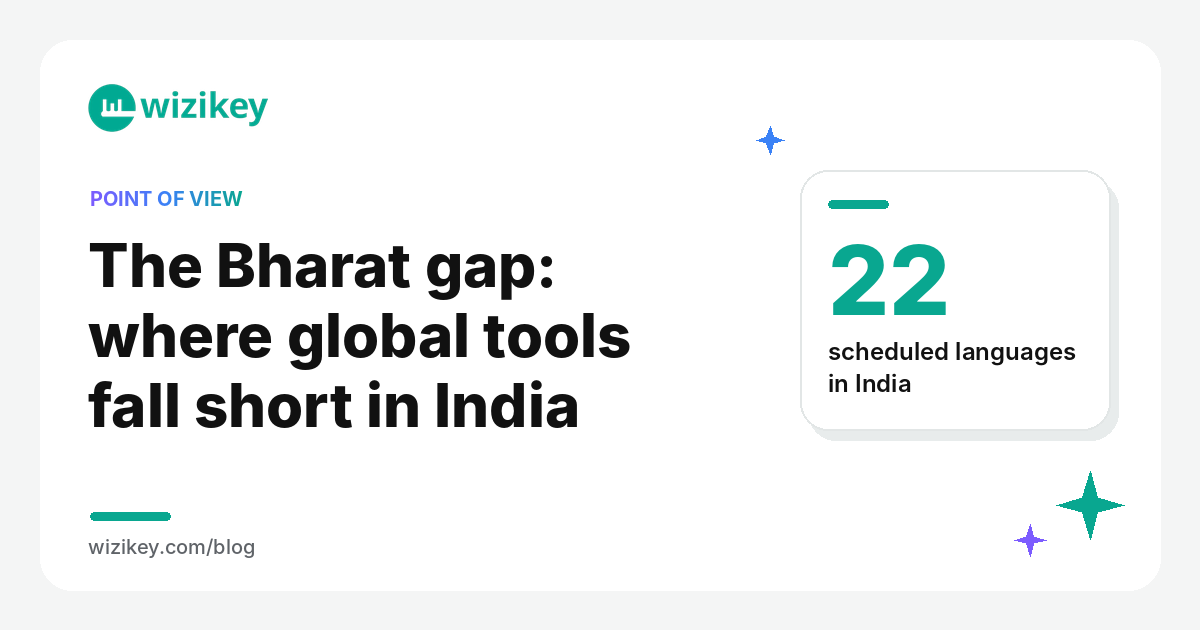
That space between where Indian reputation is made and where global tools look is what we call the Bharat gap.
What is the Bharat gap in media monitoring?
The Bharat gap is the coverage global platforms miss or analyse poorly because it sits outside English, outside metro editions, or outside digital. In India, that’s a big share of what people actually read and watch.
India has 22 scheduled languages. Hindi, Marathi, Tamil, Telugu, Bengali, Malayalam, Kannada and Gujarati newspapers each reach millions of readers, often more than English papers do in the same state. Regional TV news shapes opinion in ways national English channels don’t. A global tool that treats these as an add-on will always have blind spots.
Where exactly do global platforms fall short?
They’re excellent at what they were designed for: English-language digital news and global social media. The gaps show up in four places.
- Regional print depth. District and city editions are where local issues start. Many global tools cover the flagship edition of a paper but not its 30 regional ones.
- Sentiment in Indian languages. Translating a Telugu headline to English and then scoring it loses sarcasm, idiom and tone. A story can read as neutral after translation and be clearly hostile in the original.
- Indian TV and broadcast. Regional news channels are hugely influential and are often only partly covered.
- Local workflows. Indian comms teams live on WhatsApp. Listed companies have SEBI disclosure duties. Pricing in dollars per seat clashes with how Indian teams share access across agencies and regional offices.
Why does this matter more in 2026?
Two reasons. First, the next wave of Indian internet users reads and watches in their own language, so regional media is growing, not shrinking. Second, AI assistants now summarise brands for people. If regional coverage of you is negative and nobody responded, that view can quietly feed into how AI tools describe you.
How do you close the Bharat gap?
You don’t need to give up global tools if your company needs them. You do need to check that someone is covering India properly. Look for:
⦁ Coverage of regional print editions, not just flagship papers
⦁ Sentiment analysed in the original language
⦁ Regional TV and radio in the same feed as digital news
⦁ Alerts on WhatsApp and Slack, not only email
⦁ Pricing that lets regional teams and agencies log in without extra seat costs
How Wizikey approaches it
We built Wizikey in India because we kept seeing this gap. Today Wizikey covers 100,000+ sources (20K+ Indian publications) across 100+ countries in 50+ languages, including 22+ Indian languages, with Indian print, TV, radio, podcasts, social and AI answers in one feed. Alerts reach teams in under 2 minutes on WhatsApp, Slack, Teams, email or the app. Every plan includes unlimited users, so a regional office in Lucknow and an agency in Mumbai can see the same thing as the CMO in Gurgaon.
Global reach matters. But in India, local depth is what keeps you from finding out about a story from a photo on WhatsApp.
FAQ
1. Do global media monitoring tools cover Indian regional languages?
Most cover some regional media, but depth varies, especially for district print editions, regional TV and native-language sentiment.
2. What is the best media monitoring tool for regional Indian media? India-built platforms such as Wizikey focus on regional coverage. Wizikey tracks 50+ languages, including 22+ Indian languages and brings regional print, TV and digital into one feed.
3. Why is translated sentiment analysis a problem?
Translation flattens tone. A sarcastic or critical regional headline can look neutral once it’s translated to English and scored.
4. Can I use a global tool and an Indian tool together?
Yes. Many multinationals keep a global platform for HQ reporting and use an India-built platform like Wizikey for Indian coverage.
===== 04-The-Bharat-gap =====
<script type="application/ld+json">
{
  "@context": "https://schema.org",
  "@type": "FAQPage",
  "mainEntity": [
    {
      "@type": "Question",
      "name": "Do global media monitoring tools cover Indian regional languages?",
      "acceptedAnswer": {
        "@type": "Answer",
        "text": "Most cover some regional media, but depth varies, especially for district print editions, regional TV and native-language sentiment."
      }
    },
    {
      "@type": "Question",
      "name": "What is the best media monitoring tool for regional Indian media?",
      "acceptedAnswer": {
        "@type": "Answer",
        "text": "India-built platforms such as Wizikey focus on regional coverage. Wizikey tracks 50+ languages, including 22+ Indian languages and brings regional print, TV and digital into one feed."
      }
    },
    {
      "@type": "Question",
      "name": "Why is translated sentiment analysis a problem?",
      "acceptedAnswer": {
        "@type": "Answer",
        "text": "Translation flattens tone. A sarcastic or critical regional headline can look neutral once it's translated to English and scored."
      }
    },
    {
      "@type": "Question",
      "name": "Can I use a global tool and an Indian tool together?",
      "acceptedAnswer": {
        "@type": "Answer",
        "text": "Yes. Many multinationals keep a global platform for HQ reporting and use an India-built platform like Wizikey for Indian coverage."
      }
    }
  ]
}
</script>